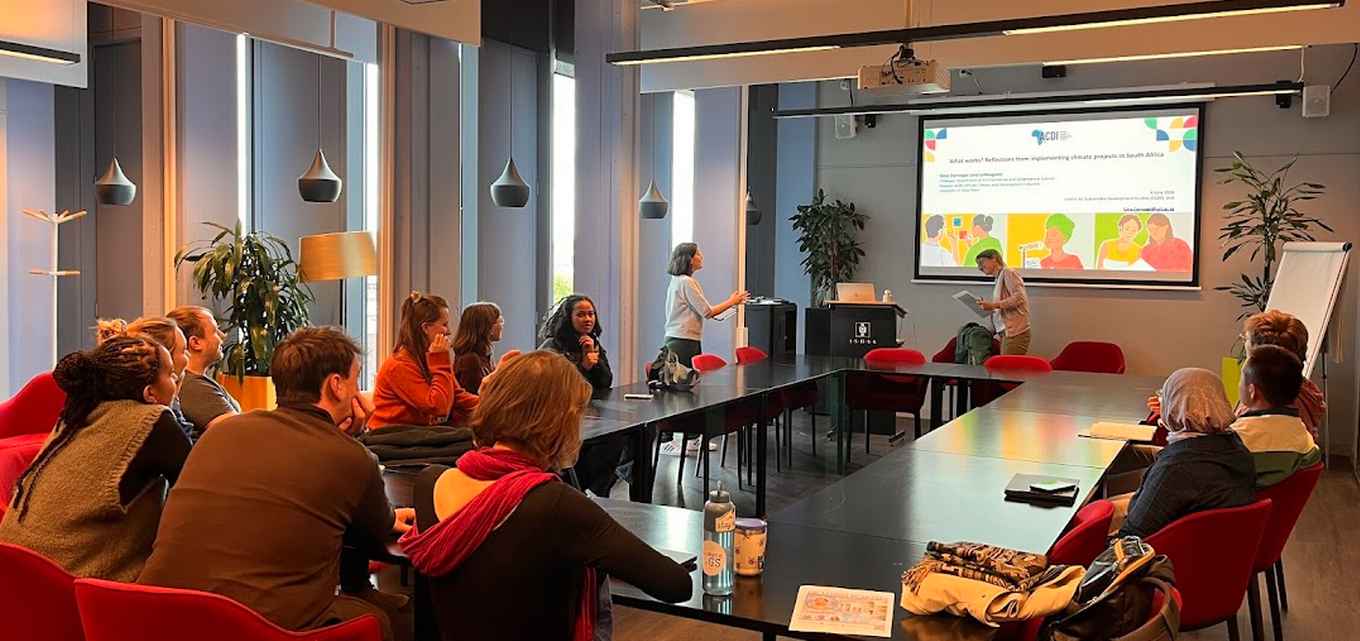
What Works? Reflections on Implementing Climate Adaptation Across Sectors in South Africa
12 June 2026
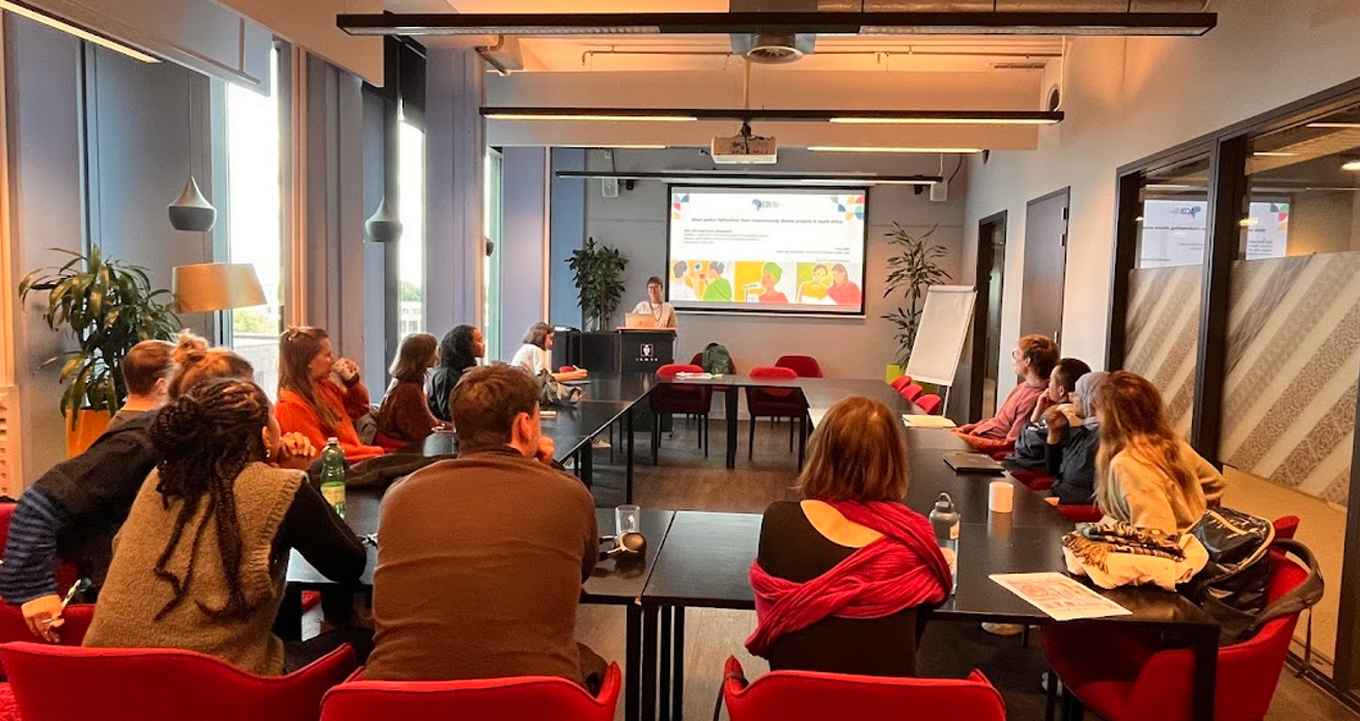
Drawing on more than 25 years of experience working on adaptation and vulnerability to environmental change, Ziervogel challenged the tendency to assess adaptation primarily through indicators, project evaluations, and policy frameworks. While these tools are important, they often overlook what happens in practice: the everyday work of institutions, partnerships, and individuals navigating climate risks on the ground.
Rather than focusing on individual success stories, the lecture explored how adaptation becomes embedded within existing governance and development systems, and what can be learned from those who are implementing it.
Beyond Stand-Alone Climate Projects
Ziervogel presented insights from a practitioner workshop convened by ACDI in late 2025, which brought together participants from government, civil society, academia, NGOs, and the private sector. Instead of identifying exemplary projects, participants were asked to reflect on activities and engagements that had enabled climate action in practice.
One of the key findings was that adaptation is increasingly happening through existing development systems rather than through separate climate programmes. In many cases, climate concerns become integrated into routine planning, service delivery, infrastructure development, or community engagement processes. Successful adaptation was often linked to institutions and partnerships that were already in place, rather than to entirely new structures created for climate purposes. This perspective shifts attention away from individual projects and towards the governance arrangements that make adaptation possible over the long term.
Adaptation as a Governance Challenge
A central argument throughout the lecture was that adaptation is fundamentally a governance issue. Climate risks interact with broader social and economic challenges, including poverty, inequality, housing, and access to basic services. As a result, responding to climate change requires more than technical expertise. It depends on how institutions coordinate, how decisions are made, and how different actors work together.
South Africa provides a particularly revealing case. The country combines relatively strong climate policies and legal frameworks with profound inequalities and significant implementation challenges. Adaptation therefore unfolds within a context where climate risks cannot easily be separated from wider development concerns.
For Ziervogel, understanding adaptation means paying attention not only to outcomes but also to the processes, relationships, and institutions through which those outcomes are produced.
What Enables Adaptation?
The workshop identified several factors that repeatedly emerged as important for enabling climate action.
One was the role of networks and communities of practice. Adaptation often depends on relationships that connect actors across sectors and scales. These networks facilitate learning, knowledge exchange, and collaboration, helping organisations respond to challenges that no single institution can address alone.
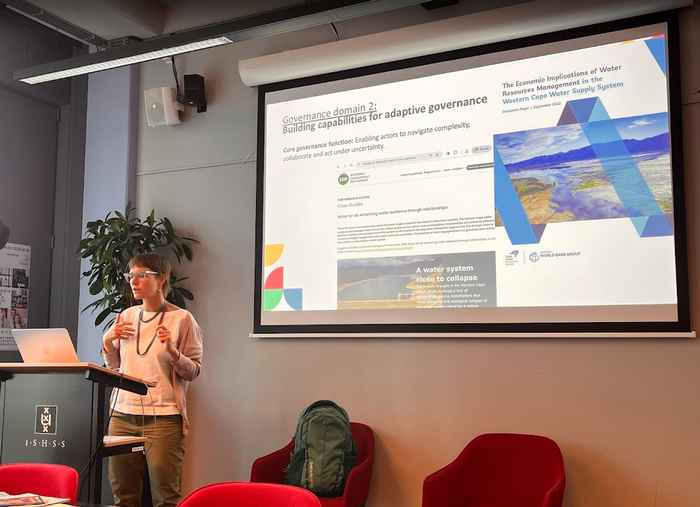
A second factor was building capabilities for adaptive governance. Participants emphasised that adaptation requires more than technical training. It involves developing the capacity to work across organisational boundaries, navigate uncertainty, and respond flexibly to changing circumstances. Long-term learning and institutional support were seen as particularly important.
The lecture also highlighted the importance of mainstreaming adaptation within government systems. Rather than treating climate change as a separate issue, many successful examples involved integrating adaptation into existing planning processes, mandates, and administrative routines. This approach can make adaptation more durable because it becomes part of everyday governance rather than an additional responsibility attached to temporary projects.
Finance, Regulation, and Long-Term Change
Finance emerged as another important theme. While climate adaptation is often associated with international funding streams, practitioners highlighted the importance of working through existing development budgets and financing mechanisms.
Reliance on short-term project funding can create challenges once funding cycles come to an end. Embedding climate considerations within broader financial systems may therefore be more effective than depending exclusively on dedicated adaptation grants. Similarly, legal and regulatory frameworks were identified as increasingly important drivers of adaptation. Regulations, accountability mechanisms, and legal processes can influence decision-making across sectors, helping ensure that climate considerations become institutionalised rather than remaining voluntary commitments.
A Development-First Perspective
Perhaps the strongest message of the lecture was that adaptation should not be separated from development. Ziervogel argued that many of the conditions that support resilience—strong institutions, effective partnerships, responsive governance, and enabling regulatory frameworks—are also fundamental to development more broadly. Adaptation works best when it is embedded within these systems rather than treated as a distinct policy domain.
This perspective challenges conventional ways of measuring progress. If adaptation increasingly occurs through existing governance arrangements, then some of its most important achievements may not be visible in project databases or indicator frameworks. Changes in institutional culture, relationships, and decision-making processes are often difficult to quantify, yet they can play a crucial role in shaping long-term resilience.
The lecture concluded with a reminder that climate adaptation is not simply about implementing climate projects. It is about strengthening the systems through which societies navigate uncertainty and respond to change. As climate impacts intensify worldwide, understanding these less visible dimensions of adaptation may be just as important as developing new technologies, policies, or funding mechanisms.