The end of Fossil Fuels? The final CLIFF Conference breaks it down
5 December 2025
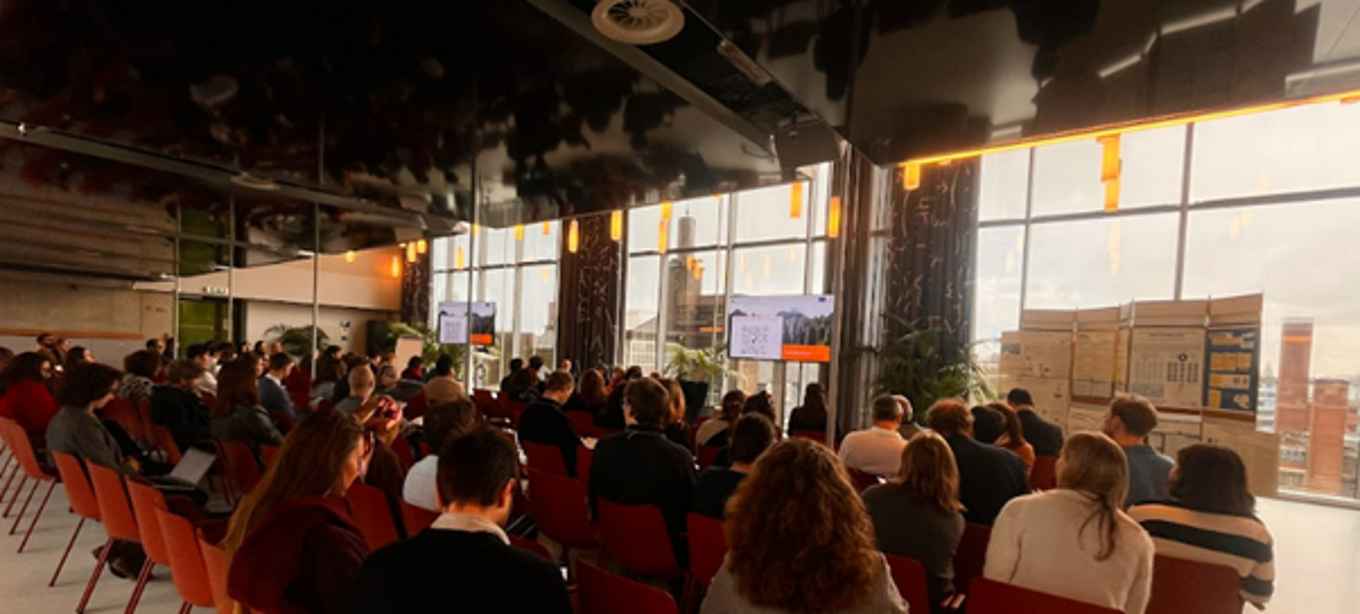
A few days after the COP30 in Belém (Brazil) ended, I had the pleasure to attend the Climate Change and Fossil Fuels (CLIFF) conference to volunteer and listen to different actors discuss phasing out fossil fuels, a highly contentious topic at the COP. The central theme of this conference, which was organised in collaboration with the Centre for Sustainable Development Studies (CSDS), was the need to create new narratives for Leaving Fossil Fuels Underground (LFFU). The conference took place at the University of Amsterdam’s (UvA) Roeterseiland campus, at De Brug on the 4th floor. The main driving force behind the conference was Professor Joyeeta Gupta, an academic known for her groundbreaking work and activism surrounding climate justice, and who has been the principal investigator during the CLIFF Project. The final conference of the CLIFF project was attended by many academics, civil society actors, policymakers and industry representatives, as well as students and early-career researchers. Through panels and discussions, this diverse community was brought together to analyse and reimagine financial flows, governance structures and legal frameworks to enable a just energy transition.
As an International Development Studies student at the University of Amsterdam, the final CLIFF Conference was an inspiring experience. Topics discussed in my classes being brought to life, and seeing the perspectives of different actors in the sector, helped broaden my own perspectives. “Questions like what barriers are in place?“," what needs to change?”, and “what can the individual do?” were racing my mind.
DAY 1: Transformative change
The theme of the conference was creating new narratives for leaving fossil fuels underground, one of the most prominent threats for climate change policies worldwide. The first day of the conference highlighted the need for transformative change. During the sessions, speakers highlighted challenges such as current financial, legal and political structures that stimulate countries in fossil fuel dependency. Speakers highlighted that human-rights litigation and regulatory reform are important in achieving systemic change. Diplomatic challenges in global politics were mentioned while underscoring that new narratives surrounding climate change politics emerge from the Global South, slowly influencing the status quo. At the same time, experts on fossil fuel companies and infrastructure discussed the need for making fossil fuel investments unattractive, taking accountability and recognising the carbon debt of European countries to shift power imbalances.
But maybe the one that struck me the most was the last session of the day, which covered the fact that leaving fossil fuels underground is not just a technical transition but a political process within and beyond the state, highlighting the importance of new coalitions in the global scene. Listening to these discussions, I realized how transformation means confronting uncomfortable truths about existing systems. The discussions made it clear that change is not only about innovation, but about shifting power, narratives, and deeply rooted interests.

DAY 2: No straightforward solution
There is no straightforward solution for climate change, but speakers at the conference explored different ways to create new narratives inside the current climate debate. During the panel discussion, the panellists questioned the narrative of relying on private finance for solving the climate change crisis and the balance between short-term regulatory politics and long-terminism in investments regarding pension funds. At the end of the panel, the doom-loop of investments and re-investment, underlining the tension between morals and profits in the financial sector was explored. Panellists discussed the difficulty of risk screening while drawing on various problems, such as a focus on short-termism and risk being seen as a concept of the future. During these discussions it became clear to me that the financial sector is a world of contradictions, full of opportunities, yet caught in its own cycles of caution and self-preservation. However, panellists noted that the panic of philanthropists, the desire for a simple, straightforward solution, and the disillusionment of society in mitigating climate change results in a lack of pressure on investors.
One strategy for creating change that was discussed during one of the panels was targeting pillars in society. A company that targets these pillars in society is called Politically Aweh, whose creator, Stephen Horn, was part of the panel at the conference. The day ended with a workshop, in which we as volunteers got to participate. The shift from academic and theoretical debates to creative and more practical implications, was a refreshing change.
DAY 3: Behavioral change & decarbonization
The complexity of a solution is often used to create “a convenient truth”, one where a solution would be too complicated and therefore is not sought after. But, as was discussed in the conference, closing your eyes creates pluralistic ignorance and is in itself a barrier to climate action. New narratives such as less is more, community over consumption and sufficiency as freedom were explored. These ideas resonated with me, because they speak to individual choices. It made me reflect on how next to systematic change, cultural change is also necessary for a just transition.
Questions such as “Who is carrying the labour of the energy transition?” and “How should that work be recognised and rewarded?” were raised, alongside broader reflections on the drivers and responsibility for climate action. The morning ended with a panel discussion on climate action through social movements with people from organisations such as Extinction Rebellion, but also a union representative.
In the afternoon, decarbonization was discussed in relation to civil society actors. Many topics were explored, such as fossil fuel lobbyist influence at the COP, banking portfolios’ alignment with the Paris Agreement, challenges of assessing how effective divestment of fossil fuel is, blue carbon initiatives and Estonia’s energy transition. The last session of the three-day conference covered the presence of extractivism in our daily lives and the romanticisation of alternatives, inviting new narratives such as non-extractionist research and indigenous experiences.
The conference did leave me wondering what indigenous experiences regarding new narratives would look like, reflecting on the lack of this perspective in the conference itself, underscoring that most of the CLIFF projects’s research was done in the Global North.
Steps further
At the end of the conference, I felt a renewed sense of commitment. The conversations showed that while the work is immense, so is the community committed to it, and that in itself is a powerful source for taking the next steps.
The CLIFF conference made clear that leaving fossil fuels underground requires transforming not only technologies but also the political, financial, and cultural systems that sustain extractivism. The next steps involve translating new justice-centred narratives into concrete policy reforms, including stronger regulatory frameworks, recognition of carbon debt, and the redesign of net-zero strategies to address root causes rather than symptoms. Reorienting financial flows remains essential, from improving risk-screening and pension fund governance to enabling Global South countries to leapfrog to renewables through predictable international support. At the same time, social movements, unions, youth groups and creative campaigns must continue building cross-sector alliances that centre marginalised communities and challenge the influence of fossil fuel lobbies. Finally, research on non-extractionist approaches and indigenous knowledge should be expanded to prevent the replication of existing power imbalances.
I sat down after everyone left and reflected on the past three days. I hope that together, these steps can consolidate a just and durable pathway for, in the end, leaving fossil fuels underground.