The Weight of Silence: Climate Coloniality, Epistemic Injustice, and Loss and Damage in Climate and Water Governance
Public lecture by Professor Farhana Sultana (Syracuse University)
- Date
- 26 June 2026
- Time
- 11:00 -13:00
- Room
- CREA Theatre Hall
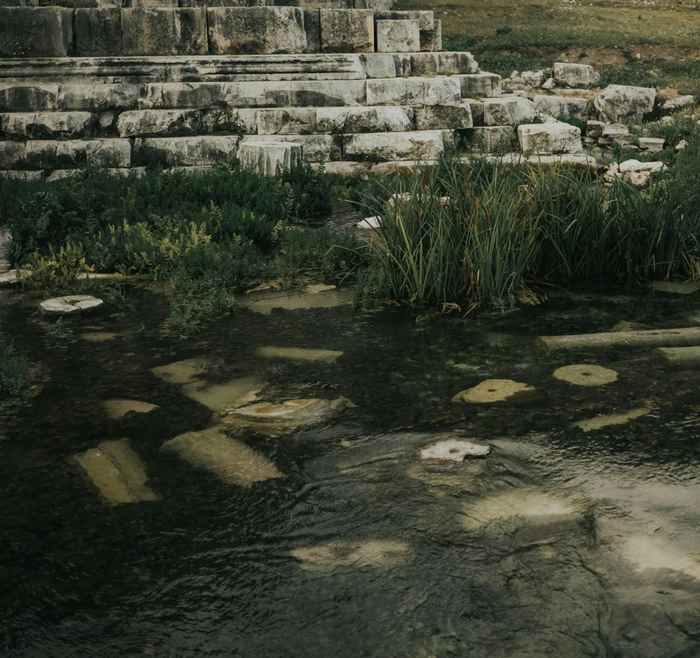
Climate change is intensifying water crises, droughts, floods, and hydrological disruption at accelerating scales, disproportionately affecting communities whose knowledge systems and relationships with water and climate are most systematically excluded from governance processes. This lecture develops the concept of epistemic injustice as a form of loss and damage, arguing that the erasure of Indigenous and Global South knowledge systems is structurally embedded within the colonial architectures of global environmental politics.
Drawing on the framework of climate coloniality, the seminar explores how epistemic silencing operates across climate and water governance: who gets to speak, whose knowledge is recognized as legitimate, and how communities are rendered voiceless in decisions shaping their climatic and hydrological futures. Addressing epistemic injustice as loss and damage, Prof. Sultana argues, requires fundamentally rethinking the epistemic foundations of environmental governance itself.
The lecture also highlights counter-narratives of refusal, resurgence, and relationality emerging from Indigenous and Global South communities, pointing toward alternative and more just climate and water futures. Decolonizing knowledge production, the talk argues, is not supplementary to this work — it is its precondition.
The event is followed by drinks in CREA Café.
About the speaker
The lecture will be given by Professor Farhana Sultana, Professor of Geography and the Environment at the Maxwell School of Citizenship and Public Affairs at Syracuse University, where she also serves as Research Director (Environment) in the Program for the Advancement of Research on Conflict and Collaboration.
Dr. Sultana is an internationally recognized interdisciplinary scholar, educator, and author whose work spans political ecology, water governance, climate change, postcolonial development, environmental justice, decolonizing knowledge, and systems transformation. She is the author of more than 100 publications, cited over 11,000 times, including the books Confronting Climate Coloniality, Water Politics, Eating, Drinking: Surviving, and The Right to Water.
Her work has been featured in outlets including Nature, The New York Times, BBC, The Guardian, and Al Jazeera. She has also presented research to diverse policy audiences, including the European Parliament, the United States Department of State, and the The Vatican.
Prior to joining Syracuse University, Dr. Sultana was faculty at King's College London and previously managed a 26-million-dollar environmental programme for the United Nations Development Programme in Bangladesh. She graduated Cum Laude from Princeton University in Geosciences and Environmental Studies, and obtained her Master’s and PhD in Geography from the University of Minnesota, where she was a John D. and Catherine T. MacArthur Foundation Fellow.
Her work is informed not only by interdisciplinary training across the natural and social sciences and extensive policy experience, but also by having lived and worked across three continents and growing up on the climate frontlines of the Global South.
Other contributors
- Dr. Amitangshu Acharya (IHE Delft)
- Dr. Ethemcan Turhan (University of Groningen)
- Dr. Karen Paiva Henrique (University of Amsterdam)